BallEngine

Glass Rush:
Multiply and break the glass

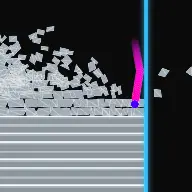
One ball rolls through multiplier gates until hundreds of balls flood the arena and smash a giant pane of glass.
Play the preview

In development0 creators want this next

Open the studio to run this mode live.

Glass Rush is being built right now

The engine, the physics and the look are done enough to watch. What is not finished is everything around them: the settings, the presets and the export path. So we shipped it as a preview instead of sitting on it.

The order is decided by these votes rather than by us, and the most-voted modes go first. If this is the one you want, say so.

What you can do now
Open it in the studio and watch a full run, with sound, exactly as it stands today.
What is held back
Settings, randomize and export. The preview runs on our defaults so every viewer judges the same version.
When it ships
The most-voted unfinished mode is the one we take next.

What Glass Rush does

One ball rolls through x1 to x4 multiplier gates until hundreds of balls flood the arena and smash a giant pane of glass.

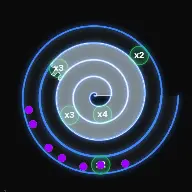
Glass Rush asks one question: can the ball multiply fast enough to break the glass? A single ball drops into a round arena. The bottom half holds a set of nested U-shaped lanes, and at the bottom of each lane sits a multiplier gate marked x1, x2, x3 or x4.

Every time a ball rolls through a gate, that many new balls fly in through the entry gap in the wall. One ball becomes five, five become twenty, and within seconds a stream of hundreds is hammering the glass that fills the other half of the arena.

The glass breaks piece by piece, in ragged cracks, and the shards fall away. Behind it, spikes line the far wall and pop any ball that breaks through. When the last of the glass goes, it shatters in one wave and the round starts again.

How a run plays out

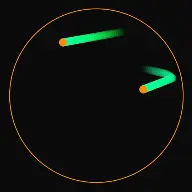
The exact sequence the engine runs in this mode, from the first frame to the moment the run resolves.
  1. 1.

    One ball, one way in

    The run opens on a single ball flying in through the one gap in the arena wall. The first seconds are all about whether it finds a lane.

  2. 2.

    Gates multiply

    A ball that rolls through an x3 gate sends three new balls in through the entry gap. The gates near the middle are worth the most and the hardest to reach.

  3. 3.

    The stream digs in

    Queued balls fly in through the gap as a stream that lobs onto the nearest glass still standing, so the crowd keeps eating into the pane from the open side.

  4. 4.

    Spikes wait behind the glass

    The far wall is lined with spikes that only matter once the glass in front of them is gone. A ball that reaches one pops.

  5. 5.

    The finale

    When almost all of the glass is gone, the rest shatters in a single wave, the broken arena holds for a moment and the round resets.

Every control in Glass Rush

These are the settings this mode adds on top of the shared physics, visual, audio, and export controls. Names match the studio sidebar exactly.

Lanes and gates

  • Lanes
  • Gate multipliers (inner lane first)
  • Inner bowl size
  • Outer lane width
  • Gate position (clock degrees)
  • Gate colours

The gate multipliers decide how explosive the run is. 4,3,2,1 is the classic; all fours is a flood.

Glass

  • Glass starts at (clock degrees)
  • Glass ends at (clock degrees)
  • Hits to break a piece
  • Crack size
  • Jagged seams
  • Ragged cracks
  • Glass colours

Hits to break a piece and crack size together set how long the glass holds out, which is the length of the video.

Spikes

  • Spikes
  • Spikes start at (clock degrees)
  • Spikes end at (clock degrees)
  • Spikes stand on
  • A spike

Spikes that pop balls keep the crowd moving and give the final seconds a second threat.

Spawning

  • Balls at the start
  • Entry gap position (clock degrees)
  • Balls released per second
  • Spawner aims
  • Most balls at once

Balls released per second sets how thick the stream through the gap gets once the gates start firing.

Sounds

  • Ball spawns
  • Gate multiplies
  • Glass breaks
  • Spike pops a ball
  • Wall bounce
  • Finale

Every event has its own sound, from a built-in effect, your own upload, a MIDI melody or the sliced song.

Why Glass Rush videos hold attention

What keeps people watching this mechanic.

A question in the first second

One ball against a wall of glass is an obvious challenge, and the viewer stays to see if it can be done.

Exponential growth is hard to look away from

The count does not climb, it explodes. Each gate pass visibly adds to a stream that gets thicker every second.

Constant destruction

Glass breaks somewhere on screen almost every frame once the stream starts, with shards falling away and new holes opening.

A clean ending

The final shatter is a clear payoff, and the reset makes the clip loop.

Videos you can make in this mode

Each of these is a different configuration of the same mode, so one setup session produces a batch of related uploads.

The classic

Four lanes at 4,3,2,1, glass across the right half, spikes on the far wall. The reference version of the challenge.

All fours

Every gate set to x4. The arena floods in seconds and the glass barely stands a chance.

Tough glass

More hits per piece and a smaller crack size, so the crowd has to grind the pane down over a full minute.

Gate rain

Multiplied balls burst straight out of the gate that made them instead of the spawner, filling the lanes from the bottom.

Safe arena

Spikes set to bounce instead of pop, so the crowd only ever grows and the finish is a packed arena.

Make your first Glass Rush video

The order that works. Following it out of sequence usually means retuning settings you already set.
  1. 1.

    Pick the gate values

    Start from 4,3,2,1. Raise them for a faster, wilder run; lower them for a slower build.

  2. 2.

    Set the glass toughness

    Hits to break a piece is the main dial for run length. Aim the default run at 30 to 45 seconds.

  3. 3.

    Place the entry

    Put the entry gap on the open side, across from the glass, so the stream has to fly over the lanes to reach it.

  4. 4.

    Give every event a sound

    A pop on spawn, a sparkle on each gate and a crunch on every break make the flood audible.

  5. 5.

    Press Randomize

    Every roll builds a different layout: which side the glass is on, the gate values, the colours and the spike line.

Settings that make the difference

  1. Smaller balls (Ball size in the ball settings) keep a crowd of hundreds readable.
  2. The mixed palette gives every ball its own colour; switch Ball colours to Global to use your usual ball colour or RGB.
  3. Ball effects, skins and trails from the ball settings all work here, but trails are best left off once the crowd is large.
  4. If a run ends too fast, raise Hits to break a piece before lowering the gate values.
  5. One seed always replays the same run, so a run you like can be exported exactly.

What breaks a run

  1. Very high gate values with fragile glass, which ends the run before the viewer understands what is happening.
  2. An entry gap inside the glass sweep, which buries the stream before it starts.
  3. Large balls with a high ball cap, which packs the arena solid so nothing moves.
  4. Spikes right next to the entry gap, which pop the stream as it arrives.

Why the count explodes

Every ball that passes a gate adds more balls, and every new ball can pass a gate too. That is exponential growth, and it is why the first seconds feel slow and the next ten feel overwhelming.

The spawner releases queued balls as a stream that speeds up while a big batch is waiting, so a burst of gate passes turns into a thick pour rather than a slow trickle.

How the glass breaks

The pane is a lattice of irregular pieces that follows every curve of the arena, filling each lane and the space above them right up to the walls. A hard hit takes one hit point from the piece it lands on; when a piece breaks, a crack runs out from it in random directions and the broken pieces fall away as jagged shards, the same way glass breaks in Breaker mode.

Balls resting against the glass wear it down slowly, so a packed arena still makes progress. When nearly all of the pane is gone, the rest shatters at once so every run gets its ending.

Glass Rush questions

Open Glass Rush

Every control on this page is already in the studio. Load the mode and start from a working run.