BallEngine

Phonk Drop:
The ball grows until the beat drops

A held track, a ball getting bigger every beat, and a face that only shows itself for a frame at a time until the drop lands and it stops hiding.
Play the preview

In development0 creators want this next

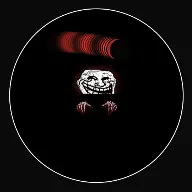
A frame from Phonk Drop
Open the studio to run this mode live.

Phonk Drop is being built right now

The engine, the physics and the look are done enough to watch. What is not finished is everything around them: the settings, the presets and the export path. So we shipped it as a preview instead of sitting on it.

The order is decided by these votes rather than by us, and the most-voted modes go first. If this is the one you want, say so.

What you can do now
Open it in the studio and watch a full run, with sound, exactly as it stands today.
What is held back
Settings, randomize and export. The preview runs on our defaults so every viewer judges the same version.
When it ships
The most-voted unfinished mode is the one we take next.

What Phonk Drop does

A ball grows inside a ring while the track holds back, a face keeps flashing behind it, and the moment the ball is big enough the beat drops and the face stays.

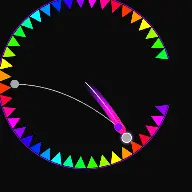
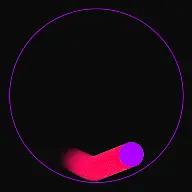
Phonk Drop is a build-and-release format. A small ball bounces inside a ring, growing a little on every beat, trailing a colour ribbon that thickens as it goes. The music is deliberately holding: an intro figure loops instead of progressing. Nothing about the run is calm, but nothing has happened yet either, and that tension is the whole point.

Behind the ball there is a face. During the build it is not really there, it flashes into view for a frame on each bounce and vanishes again, so a viewer keeps catching it out of the corner of their eye without ever getting a proper look. That is the hook the format is built on, and it is why people stay past the first four seconds.

When the ball crosses its growth threshold, three things happen at once. The loop releases and the full track drops. The face reveals completely and stops hiding. The trail, by now a wide flowing ribbon, is filling most of the ring. The run has spent thirty seconds promising something, and it delivers it on one frame.

How a run plays out

The exact sequence the engine runs in this mode, from the first frame to the moment the run resolves.
  1. 1.

    The ball starts small and the music starts held

    The run opens with a small ball inside a white ring and the track parked on an intro loop. The audio engine holds its position in the song rather than advancing, so the build can last as long as the ball takes rather than as long as the first bars take.

  2. 2.

    Every beat adds size and trail

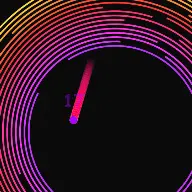
    Growth is on a timer tied to the beat, so the ball is measurably bigger every few seconds. The trail is drawn from the ball along its own path with a hue that keeps moving, which is what turns a thin line at four seconds into a wide spirograph ribbon by twenty-eight.

  3. 3.

    The face peeks on impact

    Each bounce flashes the face behind the ball and then hides it again. Show Face turns the layer on, Face Size sets how much of the ring it occupies, and Eye Glow with Eye Glow Colour decides how hard it reads against the background during those single-frame appearances.

  4. 4.

    The threshold releases everything

    Once the ball passes its growth threshold the hold is lifted and the track drops. Beat Drops After sets the target time so you can shoot for a specific runtime, and Drop Burst fires the visual hit on the same frame. From here the face stays fully visible and pulses with the beat.

Every control in Phonk Drop

These are the settings this mode adds on top of the shared physics, visual, audio, and export controls. Names match the studio sidebar exactly.

Phonk Drop Settings

  • Show Face
  • Face Size
  • Eye Glow
  • Eye Glow Colour
  • Drop Burst
  • Beat Drops After (sec)

The face and the drop are the format. Beat Drops After is the one to set first because it decides the length of the whole video; everything else is tuned against it.

Ball growth

  • Growth Mode
  • Growth Duration
  • Max Size

Growth is what triggers the drop, so it is pacing rather than decoration. A longer duration means a longer build and a later payoff, which suits a track with a slow intro.

Trail

  • Line Trail Engine
  • Trail Length
  • Trail Thickness
  • RGB Lighting

The ribbon is the visual record of how long the build has run. Longer trails fill the ring faster and make the pre-drop section feel busier.

Audio

  • Source
  • Melody
  • Music Sync

The track needs a clear drop for the format to work. Anything with a flat energy curve leaves the reveal landing on nothing.

Why Phonk Drop videos hold attention

What keeps people watching this mechanic.

The face is an unanswered question

Something appears for one frame and disappears. Viewers do not scroll away from an image they have not managed to look at properly yet, and the format reissues that question on every single bounce.

Growth is a visible countdown

The ball is bigger than it was, and the ring is a fixed size, so anyone can see roughly how much longer this has to run. A viewer who can estimate the wait will usually take it.

The audio promises before the visual pays

A held loop is a recognisable sound. People know what a track doing this is about to do, which means the drop is anticipated rather than surprising, and anticipated payoffs hold attention better.

The end is unambiguous

The drop is a hard cut in three channels at once. There is no ambiguity about whether the interesting part has happened, so the run has a real ending instead of a fade.

Videos you can make in this mode

Each of these is a different configuration of the same mode, so one setup session produces a batch of related uploads.

Standard build to drop

One ball, one ring, Beat Drops After around forty-five seconds. The format at its plainest and the one to shoot first.

Short build

Drop at twenty seconds for feeds that punish slow openings. The ribbon is thinner at the reveal, so raise trail thickness to compensate.

Face reveal series

Identical settings, a different face each time. The format is built around a character, so a recurring cast is the cheapest way to make a series out of one setup.

Colour-matched to the track

Set the trail hue and Eye Glow Colour to the artwork of the song you are using. It reads as deliberate art direction and costs two settings.

Slow build, big ball

A high max size with a long growth duration. The ball ends up nearly filling the ring, which makes the last few pre-drop bounces feel cramped and urgent.

Caption over the build

Put a line of text over the build section only. The build is the part with spare attention; after the drop the frame is doing enough on its own.

Make your first Phonk Drop video

The order that works. Following it out of sequence usually means retuning settings you already set.
  1. 1.

    Pick the track first

    This format is driven by the drop, so choose a song with a clear one and note where it lands. Everything else is fitted to that.

  2. 2.

    Set the drop time

    Set Beat Drops After to the runtime you want. Play it once and check that the ball is visibly close to full size when the release happens.

  3. 3.

    Tune the face

    Turn Show Face on, size it so it reads at phone scale, and set Eye Glow high enough that the single-frame peeks register against your background.

  4. 4.

    Fill the ring

    Raise trail length until the ribbon covers most of the ring by the time the drop arrives. An empty ring at the reveal is the most common way this format falls flat.

  5. 5.

    Export vertical

    Shoot 9:16, keep the ring inside the safe area, and save the configuration before you change the face for the next one in the series.

Settings that make the difference

  1. Set Beat Drops After to match your track, not the other way round. The music is the only clock a viewer can hear.
  2. The peeks need contrast. A dark face on a dark background flashes past invisibly and the hook does not land.
  3. Leave the ring white. Every high-performing example of this format uses a plain bright ring because it is the one thing not competing for attention.
  4. A big Drop Burst covers the transition. The frame is changing in three ways at once, and a burst hides any seam between them.
  5. Save the whole configuration as a preset once it works. This format is a series format and re-tuning it per video wastes the setup.

What breaks a run

  1. Choosing a track with no drop. The entire build is a setup for a payoff, and without one the run just stops.
  2. Making the face fully visible from the start. The reveal is the product; showing it early spends it for nothing.
  3. Growing the ball too fast. A drop at eight seconds leaves no time for the trail to fill the ring or for the tension to build.
  4. Turning the trail off. Without the ribbon there is no visual record of how long the build has run, and the ring looks the same at second thirty as at second three.

Why the music has to be held, not just delayed

A conventional edit would start the drop at a fixed timestamp. This mode holds the song in a loop instead, and releases it when the simulation reaches a state. That difference matters because the ball is what the viewer is watching: if the drop lands at thirty seconds regardless of how big the ball is, the two halves of the video have nothing to do with each other.

Holding also makes the run robust. A ball that gets an unlucky sequence of bounces takes slightly longer to reach its threshold, and the music simply waits. The alternative is a drop that fires while the ball is still visibly small, which is the one failure a viewer will notice immediately.

The practical consequence is that Beat Drops After is a target rather than a hard cut. Set the growth so that the threshold is reached at roughly that time and the two clocks stay in agreement.
Designing a face that works at one frame

During the build the face is on screen for single frames at a time. That rules out detail. What survives at that exposure is silhouette, a hard outline, and the eyes, which is why Eye Glow exists as its own control rather than being folded into a general brightness setting.

Size is the other half. A face that fills the ring reads instantly but leaves nowhere for the ball and the ribbon to live. A face at roughly half the ring width gives the peeks room to happen behind the motion rather than under it.

After the drop the constraint inverts. The face is now permanent and pulsing with the beat, so it has to hold up to being looked at for twenty seconds. A design that only works as a flash will feel thin in the second half of the video, and that is worth checking before you shoot a whole series with it.

Phonk Drop questions

Open Phonk Drop

Every control on this page is already in the studio. Load the mode and start from a working run.