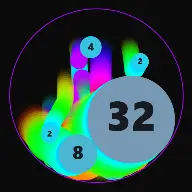
BallEngine

Plinko:
Forty coin flips on the way down

A staggered peg board over scoring bins, run as a named race with a leaderboard or as a continuous rain that piles up until the board is full.
Play the preview

In development0 creators want this next

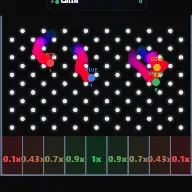
A frame from Plinko
Open the studio to run this mode live.

Plinko is being built right now

The engine, the physics and the look are done enough to watch. What is not finished is everything around them: the settings, the presets and the export path. So we shipped it as a preview instead of sitting on it.

The order is decided by these votes rather than by us, and the most-voted modes go first. If this is the one you want, say so.

What you can do now
Open it in the studio and watch a full run, with sound, exactly as it stands today.
What is held back
Settings, randomize and export. The preview runs on our defaults so every viewer judges the same version.
When it ships
The most-voted unfinished mode is the one we take next.

What Plinko does

A staggered peg board over a row of scoring bins, run either as a named race everyone can bet on or as a continuous satisfying rain.

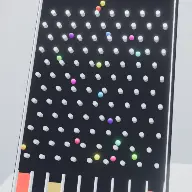
Plinko is a vertical peg board of the Galton kind: a staggered triangular lattice of round pegs above a row of bins. Balls drop from the top, ping-pong down through the pegs under gravity, glance off the side walls and the bin dividers, and settle somewhere at the bottom.

The appeal is that nobody, including the person who set it up, can tell where a ball will land. Every peg is a coin flip and the outcome is the sum of forty of them. It is the purest "watch this and find out" mechanic in the catalogue, which is why the format keeps reappearing on every platform.

There are two flavours. Race drops a fixed set of named, coloured racers at once and declares a winner by whichever rule you choose. Rain drops balls continuously on an interval and lets them pile into the bins, which is the classic satisfying version with no competition in it at all.

How a run plays out

The exact sequence the engine runs in this mode, from the first frame to the moment the run resolves.
  1. 1.

    Balls enter at the top

    In Race mode a set of two to eight named racers drop together. In Rain mode balls arrive on an interval and keep arriving until the ball cap is reached.

  2. 2.

    The peg lattice randomises the path

    Each contact deflects the ball left or right. Because the lattice is staggered, small differences at the top become large differences at the bottom, which is what makes the outcome genuinely unpredictable.

  3. 3.

    Bins score the landing

    The row of bins at the bottom carries values, either the defaults or your own. Dividers deflect balls at the last moment, so a ball can change its mind on the final bounce.

  4. 4.

    A winner or a pile

    Race holds on the result and restarts, with the win rule set to first to land, last to land, or highest-value bin. Rain simply accumulates until the cap, filling the bins visibly.

Every control in Plinko

These are the settings this mode adds on top of the shared physics, visual, audio, and export controls. Names match the studio sidebar exactly.

Mode and rules

  • Mode
  • Drop Mode
  • Win Condition
  • Show Names
  • Show Ranking

Drop Mode is the structural choice between Race and Rain. Win Condition changes what a race is about: first to land rewards a fast lane, highest-value bin rewards a lucky one.

Board

  • Board & Obstacles
  • Obstacle Shape
  • Obstacle Layout
  • Auto-Fit Ball
  • Obstacle Color Mode
  • Obstacle Color
  • Obstacle Glow
  • Show Walls
  • Wall Color

Layout and shape decide how chaotic the descent is. Auto-Fit Ball keeps the ball sized so it interacts with the lattice properly instead of falling through the gaps.

Bins and scoring

  • Bins
  • Bin Values
  • Custom Values
  • Show Bin Values
  • Bin Color Mode
  • Edge Color

Custom bin values are how you make the board mean something. A high-value bin in the hardest place to reach gives the whole drop a target.

Racers and scoreboard

  • Racers
  • P1 Color
  • Scoreboard
  • Show Leaderboard
  • Position
  • Rank By
  • Show Ball Scores
  • Live Counter
  • Counter Shows

In Race mode the leaderboard is what turns a drop into a contest. In Rain mode the live counter is the equivalent, giving the pile a running total.

Why Plinko videos hold attention

What keeps people watching this mechanic.

The outcome is genuinely unknown

Forty consecutive deflections cannot be eyeballed. Viewers stay because there is no way to skip to the answer, and there is no version of this where the ending is obvious.

Viewers commit to a lane

People pick a colour or a bin before the drop lands. That silent bet is what makes the last half second matter.

The last bounce can flip it

Bin dividers mean a ball that looked settled can still change bins. A format that keeps its reversal until the final frame keeps people to the final frame.

Rain is endlessly rewatchable

The continuous version has no plot at all, which is exactly why it loops well and holds up as background-satisfying content.

Videos you can make in this mode

Each of these is a different configuration of the same mode, so one setup session produces a batch of related uploads.

Named race

Six racers, names on, leaderboard on. The most engaging version and the easiest to build a series from.

Classic rain

Continuous drops piling into the bins with a live counter. The satisfying version, and it loops cleanly.

Jackpot bin

One very high value bin in the hardest position. Every drop becomes an attempt at it.

Last to land

Win Condition set to last to land, which inverts the whole race and rewards the most chaotic path.

Custom board shape

A different obstacle shape and layout so the board reads as your own rather than as a stock lattice.

Audience race

Racers named from comments. The identity is the format and it produces its own next episode.

Make your first Plinko video

The order that works. Following it out of sequence usually means retuning settings you already set.
  1. 1.

    Choose Race or Rain

    Race for a video with a winner, Rain for a loop. Nearly every other setting follows from this.

  2. 2.

    Set the board

    Pick the obstacle layout and turn on Auto-Fit Ball so the ball is properly sized against the lattice.

  3. 3.

    Value the bins

    Set bin values so the board has an obvious prize and an obvious risk. Show the values on screen.

  4. 4.

    Name the racers

    In Race mode, name and colour each racer and turn on the leaderboard so viewers can follow their pick.

  5. 5.

    Time a full drop

    Watch a run end to end. If the descent is too quick to bet on, raise the board height or slow the drop.

Settings that make the difference

  1. Show the bin values. An unlabelled board is pretty; a labelled one is a bet.
  2. Auto-Fit Ball prevents the most common setup failure, which is a ball small enough to fall between pegs without touching anything.
  3. Last to land is an underused win condition. It rewards the path everyone is watching anyway.
  4. In Rain mode the live counter is what gives an endless loop a sense of progress.
  5. Keep racer colours far apart. On a busy lattice, similar colours are impossible to track.

What breaks a run

  1. A board so short the outcome is decided in three bounces. The unpredictability needs distance to accumulate.
  2. Eight racers on a narrow board, where the field is a single clump and nobody can follow their pick.
  3. Bins all worth the same, which removes any reason to care where a ball lands.
  4. Turning walls off on a wide board, so balls exit the sides and never reach a bin at all.

Why the board has to be tall

A Plinko board is a randomiser, and the quality of the randomisation is a function of how many independent deflections a ball goes through. Three rows of pegs produce eight possible paths and a viewer can see the answer coming. Thirty rows produce a distribution nobody can read.

That is why board height matters more than any other setting for the feel of the format. The height is the suspense, because it is literally the number of decisions still pending.

Height also buys watching time in the most honest way possible. A longer descent is not padding, it is more of the thing the viewer came for, and every additional row genuinely adds uncertainty rather than delay.
Race and Rain are different products

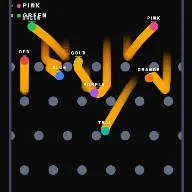
Race mode is a competition video. It has named contestants, a leaderboard, a winner and a restart. It works because viewers pick a side, and everything about the presentation exists to make picking a side easy: names, strong colours, ranking, per-ball scores.

Rain mode has none of that. Balls arrive on a timer and pile up. There is no winner and nothing to bet on, and it works for exactly the opposite reason: it demands nothing, so it survives being watched with half the viewer’s attention while the bins slowly fill.

Do not try to blend them. A rain with names is confusing and a race with sixty balls is unreadable. Choose the product first, then set everything else to serve it.

Plinko questions

Open Plinko

Every control on this page is already in the studio. Load the mode and start from a working run.