BallEngine

Plinko 3D:
Every peg plays a note

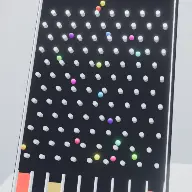
A real plinko machine leaning back on its stand, where the path a ball takes down the lattice is also the way it phrases your melody.
Play the preview

In development0 creators want this next

A frame from Plinko 3D
Open the studio to run this mode live.

Plinko 3D is being built right now

The engine, the physics and the look are done enough to watch. What is not finished is everything around them: the settings, the presets and the export path. So we shipped it as a preview instead of sitting on it.

The order is decided by these votes rather than by us, and the most-voted modes go first. If this is the one you want, say so.

What you can do now
Open it in the studio and watch a full run, with sound, exactly as it stands today.
What is held back
Settings, randomize and export. The preview runs on our defaults so every viewer judges the same version.
When it ships
The most-voted unfinished mode is the one we take next.

What Plinko 3D does

A real plinko machine leaning back on its stand, where every peg hit plays the next note so the descent arpeggiates your melody.

A physical plinko board is not a flat wall. It is a plane leaning back on a stand, so the balls roll down the face of it as much as they fall past it, and that tilt is exactly what this mode simulates. The board is a real object in a 3D scene rather than a diagram of one.

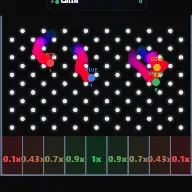
The lattice is the same Galton construction as the flat version: even rows sitting on the bin dividers, odd rows on the bin centres, with the same divider and wall resolution and the same bin tally. What changes is that it is expressed in board-local coordinates, so the whole board group can simply be tilted.

The signature is the audio. One note per peg hit means a descent arpeggiates the loaded melody all by itself, and the bin entry resolves it with an accent. A ball falling through forty pegs plays forty notes, and it plays them in the rhythm of its own bouncing.

How a run plays out

The exact sequence the engine runs in this mode, from the first frame to the moment the run resolves.
  1. 1.

    The board leans back

    A tilted plane with a peg lattice on its face. Balls descend by rolling and bouncing down the board rather than dropping through empty air, which is what a real machine does.

  2. 2.

    Pegs arpeggiate the melody

    Every peg contact advances the song by one note, so the path a ball takes is also the phrasing it plays. Two balls on different paths play the same melody with different timing.

  3. 3.

    Bins tally and accent

    Labelled bins collect the balls and keep a live tally. Entering a bin resolves the phrase with an accent, so a landing is audibly the end of something.

  4. 4.

    The score climbs

    A prize strip and score pops report what each landing was worth, with an optional leaderboard for a competitive run.

Every control in Plinko 3D

These are the settings this mode adds on top of the shared physics, visual, audio, and export controls. Names match the studio sidebar exactly.

Board and drop

  • The Board
  • The Drop
  • Framing
  • Pegs & Frame

Framing is more important here than in the flat version, because a tilted board can be shot from angles that flatter or ruin it.

Score

  • Score
  • Prize Strip
  • Score Pops
  • Show Score
  • Leaderboard

The prize strip gives the bins meaning. Without values, a landing is a position rather than a result.

Colour

  • Color
  • Ball Color Mode
  • Gradient End
  • Centre Bin
  • Edge Bin

Colouring the centre and edge bins differently makes the risk gradient of the board readable at a glance.

Audio

  • Override Audio

Leave the override off so peg hits drive the melody. That link is the reason this mode exists rather than the flat one.

Why Plinko 3D videos hold attention

What keeps people watching this mechanic.

The path plays the tune

The audio is generated by the same randomness the viewer is watching, so the sound and the picture are the same event rather than two layers.

Depth makes the board an object

A tilted board reads as a machine rather than as a graphic, and objects hold attention better than diagrams.

The outcome stays unknown

Forty deflections cannot be predicted, so there is no point in the descent where the ending is obvious.

The accent marks the answer

The bin entry resolves the arpeggio, so the result is audible as well as visible even for a viewer who looked away.

Videos you can make in this mode

Each of these is a different configuration of the same mode, so one setup session produces a batch of related uploads.

Single-ball arpeggio

One ball, a melodic scale, and a long board. The clearest demonstration of the peg-note idea.

Prize board

A prize strip with a clear jackpot bin, so every drop is an attempt at something specific.

Multi-ball rain

Continuous drops for a dense arpeggio and a busy board, which works well as ambient content.

Leaderboard run

A competitive setup with the leaderboard on, turning the board into a scoring contest.

Gradient balls

A colour gradient across the balls so a crowded board stays readable.

Close-framed board

Tight framing on the tilted face so the depth of the machine is obvious from the first frame.

Make your first Plinko 3D video

The order that works. Following it out of sequence usually means retuning settings you already set.
  1. 1.

    Frame the board

    Set the camera so the tilt is visible. A head-on shot throws away the entire reason to use the 3D version.

  2. 2.

    Choose the melody

    The peg hits will arpeggiate it, so a melody with a clear shape works far better than a dense one.

  3. 3.

    Value the bins

    Add a prize strip so landings mean something, and colour the centre and edge bins differently.

  4. 4.

    Set the drop

    Decide between single dramatic drops and a continuous rain. They are different videos.

  5. 5.

    Check the resolve

    Listen to a full descent and confirm the bin accent lands as a resolution rather than as another peg hit.

Settings that make the difference

  1. Leave the audio override off. The peg-note link is the whole point of this mode.
  2. A melody with a clear contour arpeggiates better than a dense one, because each peg hit only gets one note.
  3. Frame so the tilt reads. The difference between this and the flat mode is visible only from the right angle.
  4. Colour the jackpot bin distinctly so the target is obvious without reading numbers.
  5. A taller board means more notes per drop as well as more uncertainty, so length buys two things at once.

What breaks a run

  1. Shooting the board head-on, which makes it look like the 2D mode with extra rendering cost.
  2. Turning the audio override on, which severs the link between the descent and the melody.
  3. Bins with no values, leaving the viewer nothing to hope for.
  4. A very dense melody, where forty peg hits produce a wash instead of a phrase.

Why the tilt matters

A flat plinko board is a perfectly good simulation of a plinko board seen from directly in front. Real machines are not built that way: the board leans back on a stand so that gravity pulls the balls down the face while the surface keeps them in contact with the pegs.

Simulating the tilt changes how the balls move. They roll and skip along the board as well as falling, contacts last longer, and the descent has a different rhythm from the flat version. That rhythm is audible, because the pegs are playing notes.

It also changes what the object is. A leaning board with depth reads as a machine that exists, and viewers treat physical objects differently from graphics. The lattice construction is identical, expressed in board-local coordinates so the whole group can be tilted; everything else follows from that one change.

The descent as a phrase

One note per peg hit sounds like a small detail and is the reason to use this mode. A ball passing through forty pegs plays forty notes, and the intervals between them are the intervals between its bounces, which are decided by the path it happened to take.

So two balls dropped into the same board play the same melody with completely different phrasing. One that goes straight down plays it evenly; one that skitters along a wall plays a cluster and then a pause. The randomness the format is built on becomes the musical performance.

The bin accent closes it. Without a resolution the arpeggio simply stops, which reads as the audio being cut off. With one, the landing is the end of a phrase, and the viewer hears the answer at the same moment they see it.

Plinko 3D questions

Open Plinko 3D

Every control on this page is already in the studio. Load the mode and start from a working run.