BallEngine

Ball Race:
The leader plays the song

Named racers down a long obstacle track, a live leaderboard, and a melody that changes hands the moment the lead does.
Play the preview

In development0 creators want this next

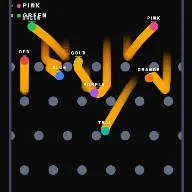
A frame from Ball Race
Open the studio to run this mode live.

Ball Race is being built right now

The engine, the physics and the look are done enough to watch. What is not finished is everything around them: the settings, the presets and the export path. So we shipped it as a preview instead of sitting on it.

The order is decided by these votes rather than by us, and the most-voted modes go first. If this is the one you want, say so.

What you can do now
Open it in the studio and watch a full run, with sound, exactly as it stands today.
What is held back
Settings, randomize and export. The preview runs on our defaults so every viewer judges the same version.
When it ships
The most-voted unfinished mode is the one we take next.

What Ball Race does

Named racers drop down a long obstacle track with a live leaderboard, and only whoever is currently leading gets to play the song.

Ball Race is the marble race format with one addition that changes what it sounds like. Several named, coloured balls fall down a tall vertical track full of static obstacles. A leaderboard shows the current standings, the camera follows the pack, and the first ball across the finish wins a podium.

The addition is the audio rule: only the current leader sings. The leader’s obstacle hits drive the melody, advancing the song one step per impact, while every other racer plays a soft muted click. Lead changes are therefore audible before they are visible, because the voice of the song moves to a different ball.

That single rule is what separates this from every other marble race. In a normal race the audio is a wash of impacts from a dozen balls. Here the soundtrack has an owner, and taking the lead means taking the melody, so a close race sounds like a fight over the song.

How a run plays out

The exact sequence the engine runs in this mode, from the first frame to the moment the run resolves.
  1. 1.

    Racers are released at the top

    Several balls, each with a colour and a name, start together at the top of a tall track. The camera follows the pack down it and the leaderboard updates continuously.

  2. 2.

    The track shapes the field

    Track Type selects the obstacle layout: a peg field, a zigzag of ledges, a funnel, or survival rooms. Each spreads the pack differently, which is what decides whether a race is close or a runaway.

  3. 3.

    The leader plays the song

    Every impact from the ball currently in first advances the melody by one note. The rest of the field is voiced as a quiet click, so a change of leader is a change of instrument.

  4. 4.

    First across the line wins

    The finish shows a podium with the final standings, then the race restarts. Optional elimination knocks out any racer that falls too far behind, so a runaway race thins rather than dragging.

Every control in Ball Race

These are the settings this mode adds on top of the shared physics, visual, audio, and export controls. Names match the studio sidebar exactly.

Racers

  • Racers
  • Racer Identity
  • Show Names
  • Show Leaderboard

Identity is the engagement work. Named racers give viewers someone to back, and the leaderboard is what lets them follow whether their pick is winning.

Track

  • Track
  • Track Type
  • Wall Color
  • Peg Color

Track type decides the character of the race. A peg field randomises constantly, a funnel bunches the pack for a tight finish, survival rooms produce eliminations.

Race rules

  • Race Rules
  • Elimination
  • Camera

Elimination keeps a race watchable when one racer gets a long lead, by removing the tail rather than letting it trail off screen.

Audio

  • Source
  • Melody
  • Only Leader Sings
  • Leader Hit
  • Other Racer Hit
  • Finish
  • Override Global Audio

Only Leader Sings is the signature of the mode. Turning it off gives an ordinary marble race; leaving it on makes lead changes audible.

Why Ball Race videos hold attention

What keeps people watching this mechanic.

People back a colour in two seconds

A named field asks the viewer to pick before anything has happened. Having a stake is the whole reason someone watches a race to the end.

Lead changes are audible

The melody moves to whoever is in front, so a close race has a soundtrack that keeps changing hands. Viewers hear the drama even when the pack is too tight to read.

The leaderboard removes ambiguity

A viewer who looks away for a second can be back up to speed instantly. Nothing kills a race video faster than not knowing who is winning.

The finish is a real finish

A podium with final standings is an unambiguous ending, and it invites a comment about who people were backing.

Videos you can make in this mode

Each of these is a different configuration of the same mode, so one setup session produces a batch of related uploads.

Classic peg race

A peg field with six to eight named racers and the leaderboard on. The default and the most reliable.

Funnel finish

A track that narrows toward the line, bunching the pack for a photo finish. The best format for a close ending.

Elimination survival

Survival rooms with elimination on. The field thins as the race goes, which keeps the second half tense rather than settled.

Named-audience race

Racers named after commenters, subscribers or teams. The identity does the engagement work and invites the next round.

Song handover

A melody with a strong recognisable line and Only Leader Sings on. Every lead change becomes an audible event.

Two-racer duel

Only two racers on a long track. Simpler to follow and far easier to build a series around.

Make your first Ball Race video

The order that works. Following it out of sequence usually means retuning settings you already set.
  1. 1.

    Set the field

    Choose how many racers and name them. Six to eight is enough for a real race without making the leaderboard unreadable.

  2. 2.

    Pick the track

    Peg field for randomness, funnel for a close finish, survival rooms for eliminations. Play one run of each before committing.

  3. 3.

    Turn on the readouts

    Leaderboard and names on. The race has to be followable at a glance on a phone.

  4. 4.

    Set the audio rule

    Leave Only Leader Sings on and give the non-leader hit a genuinely quiet sound, so the leader’s melody is clearly the foreground.

  5. 5.

    Watch a full race

    Check that the finish is not a runaway. If one racer is clear by halfway, change the track type rather than the physics.

Settings that make the difference

  1. Give racers strongly separated colours. A leaderboard is useless if two of the top three look alike at phone size.
  2. The track type does more for closeness than any physics setting. Choose it first.
  3. Elimination is the fix for a runaway leader. It turns a dull second half into a countdown.
  4. Keep the non-leader hit quiet but not silent. A little texture underneath sells the size of the pack.
  5. Racer names taken from your comments turn one video into a recurring format with a built-in audience.

What breaks a run

  1. Too many racers. Past ten the leaderboard is a wall and nobody can find the ball they picked.
  2. Turning Only Leader Sings off, which throws away the one thing that makes this different from every other marble race.
  3. A track so long the pack has settled before the finish. Length is not tension.
  4. Naming racers in tiny text. If the names are unreadable, the field is just coloured circles.

Why only the leader sings

A marble race generates a lot of impacts. If every one of them advances the melody, the song is played by the pack as a whole, which means it is played by nobody in particular. The result is a texture rather than a tune, and it sounds the same whoever is winning.

Handing the melody to the current leader changes what the audio is for. It stops being ambience and becomes a readout: the song is a property of first place, and a lead change hands it over mid-phrase. Viewers notice the handover before they have consciously read the leaderboard.

It also solves a practical problem. A single voice advancing one note per impact keeps the melody recognisable at any pack size, where a dozen balls all advancing it would scramble the tune within seconds.
Choosing a track that produces a close race

Closeness is mostly a property of the layout rather than of the physics. A peg field randomises every contact, so the field constantly reshuffles and no lead is stable, which produces frequent lead changes but rarely a dramatic finish.

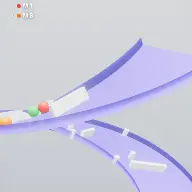
A funnel does the opposite. It spreads the pack early and then squeezes it back together toward the line, so the last few seconds are tight even when the middle of the race was not. If your videos keep ending with a clear winner ten seconds out, this is the fix.

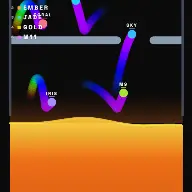
Survival rooms change the question from who is fastest to who is left. Combined with elimination they turn a race into a countdown, which is a better structure for a longer run because it keeps producing events rather than relying on the finish alone.

Ball Race questions

Open Ball Race

Every control on this page is already in the studio. Load the mode and start from a working run.