
BallEngine

Spin Battle:
Hold, spin, or lose it all

Two teams, one wheel, and only one outcome that actually scores. First silo past the win line takes the match.
Play the preview

In development0 creators want this next

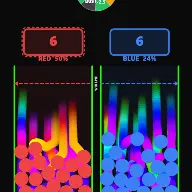
A frame from Spin Battle
Open the studio to run this mode live.

Spin Battle is being built right now

The engine, the physics and the look are done enough to watch. What is not finished is everything around them: the settings, the presets and the export path. So we shipped it as a preview instead of sitting on it.

The order is decided by these votes rather than by us, and the most-voted modes go first. If this is the one you want, say so.

What you can do now
Open it in the studio and watch a full run, with sound, exactly as it stands today.
What is held back
Settings, randomize and export. The preview runs on our defaults so every viewer judges the same version.
When it ships
The most-voted unfinished mode is the one we take next.

What Spin Battle does

Two teams hold a stash, a prize wheel decides what happens to it, and the first silo to fill past the win line takes the match.

Spin Battle is a gambling format with the rules written on the screen. Each team holds a stash of balls. A wheel is spun. Depending on where it lands, that stash is multiplied, poured into the team’s silo, stolen from the other side, or cut in half. The first silo whose settled balls reach the win line wins.

The tension comes from the fact that only one outcome scores. Multiplying is exciting and worth nothing until a drop arrives, so a team sitting on a huge stash is one bad spin from losing most of it. Holding is a real gamble rather than a strategy the simulation guarantees.

Nothing about the state of the match is implicit. The objective is stated at the start, a toast reports the result of every spin, the win line is labelled, and a live fill percentage sits under each silo. A viewer who joins ten seconds in can read the entire situation.

How a run plays out

The exact sequence the engine runs in this mode, from the first frame to the moment the run resolves.
  1. 1.

    Each team holds a stash

    Both teams start with a stash of balls that is not yet worth anything. The stash number is shown, so the size of what is at risk is always visible.

  2. 2.

    The wheel decides

    An eight-slice wheel gives four outcomes: multiply the stash, drop it into the silo, steal half of the opponent’s stash, or bust half of your own. A stash at the cap is forced to drop, so nobody can stall forever.

  3. 3.

    Only a drop scores

    Dropping pours the stash into that team’s silo and resets it to the starting count. Every other outcome moves numbers around without putting a single ball in a silo.

  4. 4.

    First past the win line wins

    The balls settle physically in the silo, so the fill is a real pile rather than a bar. The first team whose settled balls cross the labelled line takes the match.

Every control in Spin Battle

These are the settings this mode adds on top of the shared physics, visual, audio, and export controls. Names match the studio sidebar exactly.

Teams

  • Teams
  • Team 1 Color
  • Team 1 Name
  • Team 2 Color
  • Team 2 Name

Names and colours are the engagement layer. A viewer who has picked a side within three seconds is a viewer who watches to the end.

On-screen state

  • Show Names & Fill %
  • Show Stash Numbers
  • Explain The Rules On Screen

Leaving the rules on screen costs a line of text and removes the only real barrier to a new viewer understanding what they are looking at.

Wheel

  • Wheel
  • Multiply Color
  • Drop Color
  • Steal Color
  • Bust Color

Colour-coding the outcomes means a viewer learns the wheel without reading it. Keep drop and bust at opposite ends of the colour scheme.

Silos and audio

  • Silos
  • Opening Drop
  • Silo Wall Color
  • Wheel Tick
  • Multiply
  • Drop
  • Steal
  • Bust
  • Silo Impact
  • Victory
  • Override Global Audio

Every wheel outcome has its own sound. That is what lets a viewer follow the match with the screen half-watched.

Why Spin Battle videos hold attention

What keeps people watching this mechanic.

The wheel is a repeating cliffhanger

Every spin is a few seconds of not knowing, several times a minute. The format manufactures suspense on a schedule.

Steal makes comebacks structural

A losing team can take half the leader’s stash in one spin. No lead is safe, so the match is never decided until the line is crossed.

The silo is a physical progress bar

Balls settle into a real pile, so progress is visible as an object rather than as a number. It is legible from any point in the video.

The rules fit in one sentence

Hold, spin, drop, fill. There is nothing to learn, so the video works for someone who arrived a second ago.

Videos you can make in this mode

Each of these is a different configuration of the same mode, so one setup session produces a batch of related uploads.

Standard two-team match

Two named teams, rules on screen, stash numbers visible. The default and the clearest.

Rivalry match

Teams named after real rivals, clubs or franchises. The identity does most of the engagement work.

High-multiplier tension

Generous multiply outcomes so stashes get very large before dropping. Every bust becomes a disaster worth reacting to.

Fast match

A low win line so silos fill quickly. Suits a short feed and makes the wheel the whole video.

Comeback special

Frequent steal outcomes for a match that flips lead repeatedly. Chaotic and very rewatchable.

Colour-coded series

A consistent wheel colour scheme across a whole series so returning viewers read the outcomes instantly.

Make your first Spin Battle video

The order that works. Following it out of sequence usually means retuning settings you already set.
  1. 1.

    Name the teams

    Give both sides a name and a strongly separated colour. This is the first thing a viewer uses to pick a side.

  2. 2.

    Leave the rules visible

    Turn on the on-screen explanation and the stash numbers. The format only works if the stakes of a spin are legible.

  3. 3.

    Set the win line

    The line height is the runtime. Lower it for short feeds, raise it for a longer match with more reversals.

  4. 4.

    Colour the wheel

    Give each outcome a distinct colour so the result reads before the toast appears.

  5. 5.

    Check a full match

    Play one through to a win and confirm the ending lands on a real drop rather than trickling over the line.

Settings that make the difference

  1. Keep the stash numbers on screen. Without them a spin is just a wheel; with them it is a bet with a visible size.
  2. Steal is what makes matches watchable to the end. Do not tune it out to make the leader’s life easier.
  3. A forced drop at the cap is a feature, not a limitation. It guarantees the match keeps moving.
  4. Distinct sounds per outcome let people follow a match on a muted-then-unmuted feed without rewinding.
  5. Set the win line by timing one match rather than by guessing. Silo fill is not linear once stashes get large.

What breaks a run

  1. Hiding the rules to look cleaner. A viewer who does not understand the wheel has no reason to care about a spin.
  2. Team colours that are close together, which makes the two silos hard to tell apart at a glance.
  3. A win line so high that the match outlasts the format. Reversals are good; forty of them is not.
  4. One sound for every wheel outcome, which removes the audible difference between a jackpot and a disaster.

Why only one outcome scores

A wheel with four good outcomes would be a slot machine, and slot machines are boring to watch because nothing is ever at risk. Here, three of the four outcomes move numbers around without putting a single ball in a silo, and only the drop converts a stash into progress.

That creates the tension the format lives on. A team with an enormous multiplied stash has, in a real sense, achieved nothing yet. They are ahead on paper and one bust away from being back where they started, and the viewer knows it because the stash number is on screen.

The forced drop at the cap is the safety valve. Without it, an unlucky sequence could leave a match spinning indefinitely with nothing ever entering a silo. With it, every match is guaranteed to keep making progress even at its most chaotic.

Filling a silo with real balls

The silos could have been progress bars. They are physical containers that the dropped balls actually fall into and settle in, which costs simulation time and buys two things.

The first is legibility. A pile of balls has texture and a visible surface, so the difference between a silo at forty percent and one at fifty is immediately readable as an amount of stuff rather than as a number to compare.

The second is drama at the line. Because the balls settle physically, a drop that lands near the win line produces a genuine moment of not knowing whether the pile will settle above or below it. A bar would simply snap to a value, and the most tense second in a match would not exist.

Spin Battle questions

Open Spin Battle

Every control on this page is already in the studio. Load the mode and start from a working run.