BallEngine

Flag Battle:
Everyone picks a flag

Three flags, a fan of strings each, and a note of the song for every cut until a single identity still holds on.
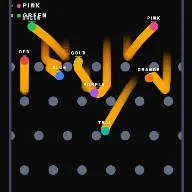
A frame from Flag Battle
Open the studio to run this mode live.

What Flag Battle does

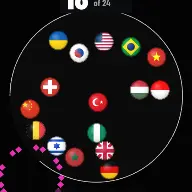
Country flags bounce inside a ring, each one holding a fan of strings. A ball that touches another flag’s string cuts it, and the last flag still holding a string wins.

Flag Battle is an identity battle royale. Entrants wear a skin, country flags by default, and bounce inside a ring. Under the default rule, String cut, three flags each hold a fan of strings pinned to their own third of the ring. A ball that touches another flag’s string cuts it. A flag whose last string is cut is out, and the last flag still holding a string wins. That is the entire mechanic and it is thin on purpose.

There are no weapons, no health bars and no statistics, because the thing the audience is actually tracking is not combat. It is their flag. A viewer picks one on sight, watches for it, and comments when it goes out or when it wins. Anything else on screen would compete with that.

The song moves with the cuts. Every cut plays the next note of the loaded melody, so sweeping through a fan is a quick run of notes and each hit is heard as well as seen. Each wall bounce pins one more string, and the whole field keeps speeding up, so a calm start turns into a frantic finish.

Three other rules are in the panel for a different kind of battle. Escape through the gap gives the ring a spinning opening, and a flag that slips out is gone. Closing arena and Last touched loses claim an entrant on the beat instead. Picking one of them starts a full field of 24 flags.

How a run plays out

The exact sequence the engine runs in this mode, from the first frame to the moment the run resolves.
  1. 1.

    The field enters wearing identities

    Entrants are skinned with country flags, zodiac signs, custom names, or uploaded ball skins. The identity is the whole hook, so it is on screen from the first frame.

  2. 2.

    Every flag holds a fan of strings

    Each flag starts with a fan of strings running from its own slice of the ring to its ball. The strings swing as the ball moves. Every time a ball bounces off the wall, it pins one more string where it hit.

  3. 3.

    Touching a string cuts it

    A ball that touches another flag’s string cuts it, and every cut plays the next note of the song. Balls can bump into each other freely. A fan is lost by being swept through, one string at a time.

  4. 4.

    The last flag holding a string wins

    A flag whose last string is cut is out. The whole field speeds up steadily, and if nobody goes out for a while, bounces stop adding new strings. Nothing removes a flag by itself. The winner is held on screen, then the arena resets and a new field enters.

Every control in Flag Battle

These are the settings this mode adds on top of the shared physics, visual, audio, and export controls. Names match the studio sidebar exactly.

Roster

  • Roster
  • Identities
  • Countries
  • Team Names (comma separated)

The roster is the video. Countries are the default because they come with a built-in audience, but custom team names turn the same mechanic into a community format.

Elimination

  • Elimination
  • Rule
  • Openings
  • Opening Width (degrees)
  • Spin Speed (deg/sec)
  • Spin Style
  • Ring Also Closes In
  • Beats Per Elimination

String cut is the default rule. Escape through the gap, Closing arena and Last touched loses are the alternatives. Openings, width and spin only work under Escape, where they decide how fast the field empties. Closing arena and Last touched loses claim an entrant every set number of beats.

String cut

  • Strings per flag at start
  • New string on every bounce
  • Speed-up (% per second)
  • Top speed (x cruise)
  • Voice string cuts

The default match is three flags at a calm speed. The speed-up decides how long it runs: a few percent per second gives viewers time to read the fans before the finish turns frantic.

Music sync

  • Music Sync
  • Follow The MIDI
  • Movement

String cut never removes anyone on a beat. Under Escape, Follow the MIDI times how long a quiet stretch lasts before the opening starts to widen. Under Closing arena and Last touched loses it makes eliminations land on notes, and turning it off gives an even timer instead.

On-screen and audio

  • On-Screen
  • Survivor Ticker
  • Name Tags
  • Show Closing Arena
  • Showdown Tick
  • Victory
  • Wall Bounce
  • Voice Wall Bounces
  • Override Global Audio

The survivor ticker is the progress bar. A viewer needs to know how many are left to feel the field thinning.

Why Flag Battle videos hold attention

What keeps people watching this mechanic.

Everyone has a flag

Nationality is the fastest identity hook there is. A viewer picks a side before they have understood the rules, which means the rules barely need explaining.

Elimination is a comment trigger

A flag going out early is something people say something about. The format generates its own comment section, which is why it keeps being made.

The field thins visibly

The survivor ticker counts down while the fans thin out. Two independent signals both say the same thing: this is heading somewhere and it is nearly there.

Every cut lands on a note

Because each cut plays the next note of the song, a fan being swept away is a quick run of notes. The run feels edited even though it is one take.

Videos you can make in this mode

Each of these is a different configuration of the same mode, so one setup session produces a batch of related uploads.

Three-flag rivalry

The default String cut match. Pick three countries with a real rivalry and let the fans decide it.

Country battle royale

Escape through the gap with 24 flags and the survivor ticker on. A longer run with a big field.

Continental heats

A roster limited to one region. Narrower audience per video but far higher engagement inside it.

Zodiac battle

The zodiac roster, which has the same instant-identity property as flags with a different audience.

Subscriber names

Custom team names taken from comments. The strongest version for a channel with an existing audience.

Fast battle

Escape with more or wider openings, so the field thins quickly and the video fits a short feed.

Tight closing arena

The Closing arena rule with a small Tightest Arena, forcing the last few into constant contact for a chaotic finish.

Make your first Flag Battle video

The order that works. Following it out of sequence usually means retuning settings you already set.
  1. 1.

    Pick the roster

    Countries, zodiac, names or custom skins. This decision is most of the video’s performance.

  2. 2.

    Load a melody

    Every cut plays the next note of the song, so the melody you load is what the knockouts sound like.

  3. 3.

    Set the pace

    Speed-up and Top speed decide how long a String cut match runs. Under Escape, Openings and Opening Width do the same job.

  4. 4.

    Turn on the readouts

    Survivor ticker and name tags on, so a viewer can find their flag and see how many are left.

  5. 5.

    Check the ending

    Watch the last few entrants. That stretch is what people stay for and it should not drag. If it does, raise the speed-up, or add an opening under Escape.

Settings that make the difference

  1. Keep the mechanic thin. Every extra element on screen competes with the flag the viewer is watching.
  2. The survivor ticker is not optional. Without it, a thinning field reads as balls disappearing at random.
  3. Leave wall bounces silent. A note per bounce buries the notes the cuts play, and those carry the song.
  4. Under Escape the ring holds still and the opening widens on its own when nobody gets out. Turn on Ring Also Closes In only when you want the last few packed together.
  5. Name tags need to be legible at phone size or the identity hook does not survive the platform.

What breaks a run

  1. Adding combat or stats. That is a different mode, and here it buries the only thing the audience is tracking.
  2. A field so large the individual flags are unrecognisable. If a viewer cannot find their pick, there is no reason to watch.
  3. Under Escape, an opening so narrow and fast that the middle of the run has nothing happening for long stretches.
  4. Voicing wall bounces with a full field. A note per bounce fires many times a second and the song stops being heard.

Why the mechanic is deliberately thin

It would be easy to add health, weapons, power-ups and statistics to this mode, and every one of them would make it worse. The audience is not tracking a fight. They are tracking one flag, and everything else on screen is a distraction from the only question they care about, which is whether it is still in.

That is why there are no HP bars here even though the engine has them for the combat mode. Reading a bar takes attention, and attention spent on a bar is attention not spent on finding your flag in a crowded arena.

The result is a format that works for a viewer who is not really watching. They glance, find their flag, glance away, glance back. A mode that demands sustained reading cannot survive that, and this one is designed for it.
Letting the song follow the knockouts

Eliminations could be handed out by the music, one entrant on every fourth beat. Under the default rule they are not. A flag is out only when its last string is cut, so a viewer can see each knockout coming: a fan getting thinner, a rival ball sweeping toward the last string.

The music follows instead. Each cut plays the next note of the loaded song, so the melody advances one note per cut. The audio marks every hit without any sound design, and it is most of why the format feels produced rather than generated.

What keeps the match from stalling is the speed-up. The field gets faster every second, and if nobody goes out for a while, bounces stop pinning new strings. Nothing removes a flag by itself, so the last flag holding a string really did outlast the rest. Escape through the gap works the same way with a spinning opening. For eliminations on the beat, pick Closing arena or Last touched loses: both claim one entrant every set number of beats and end in a final showdown.

Flag Battle questions

Open Flag Battle

Every control on this page is already in the studio. Load the mode and start from a working run.