BallEngine

Marble Race 3D:
First to the podium

Named marbles down a real 3D chute with a live leaderboard, where the melody belongs to whoever is currently in front.
Play the preview

In development0 creators want this next

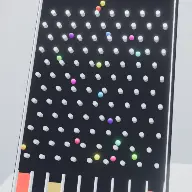
A frame from Marble Race 3D
Open the studio to run this mode live.

Marble Race 3D is being built right now

The engine, the physics and the look are done enough to watch. What is not finished is everything around them: the settings, the presets and the export path. So we shipped it as a preview instead of sitting on it.

The order is decided by these votes rather than by us, and the most-voted modes go first. If this is the one you want, say so.

What you can do now
Open it in the studio and watch a full run, with sound, exactly as it stands today.
What is held back
Settings, randomize and export. The preview runs on our defaults so every viewer judges the same version.
When it ships
The most-voted unfinished mode is the one we take next.

What Marble Race 3D does

Named marbles racing down a descending 3D track with a live leaderboard, where only the leader gets to play the melody.

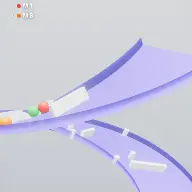
Marble Race 3D is the marble race everyone recognises, run through a real three-dimensional track. Named, coloured marbles descend an obstacle course, a live leaderboard tracks the standings, stragglers can be eliminated, and the first across the line takes the podium.

It shares its signature with the flat version: only the current leader’s obstacle hits advance the melody. Everyone else plays a soft click. So the soundtrack belongs to whoever is in front, and a lead change hands it over mid-phrase, which is audible before the leaderboard has caught up.

The track is a chute swept along a descending centreline, and the shape of that centreline is what makes each race different. A tightening funnel bunches the pack for a close finish; a long spiral spreads it out; a slalom keeps the field crossing each other all the way down.

How a run plays out

The exact sequence the engine runs in this mode, from the first frame to the moment the run resolves.
  1. 1.

    Marbles are released together

    A field of named, coloured marbles starts at the top of a descending track. The camera follows the pack and the leaderboard updates continuously.

  2. 2.

    The track shape decides the race

    The chute is swept along a centreline whose shape sets how the pack spreads: helices, funnels, slaloms, ovals and hourglass profiles all produce different race characters.

  3. 3.

    The leader owns the melody

    Only the current leader’s obstacle hits advance the song. Everyone else contributes a pack click, so first place is audible as well as visible.

  4. 4.

    Finish and podium

    The first marble across the line wins and the podium shows the standings. Elimination can remove marbles that fall too far behind so a runaway race still thins.

Every control in Marble Race 3D

These are the settings this mode adds on top of the shared physics, visual, audio, and export controls. Names match the studio sidebar exactly.

Track

  • Track
  • Shape
  • Show Track
  • Track Color

Shape is the most consequential setting in the mode. It decides whether a race is close, spread out or constantly reshuffling.

Marbles

  • Marbles
  • Marble Identity

Names and colours are the reason anyone cares who wins. A field of identical marbles is a physics demo rather than a race.

Race rules

  • Race
  • Leaderboard
  • Elimination
  • Loop

The leaderboard is what makes the race followable in a 3D scene where marbles can pass behind the track.

Audio

  • Pack Click
  • Knock-Out Sound
  • Override Audio

The pack click needs to sit clearly under the leader’s melody. Too loud and the tune is buried, too quiet and the field feels empty.

Why Marble Race 3D videos hold attention

What keeps people watching this mechanic.

Picking a marble is instant

Names and colours give viewers a stake in the first seconds, which is what converts a scroll into a watch.

The lead is audible

The melody moving to a new marble tells the viewer the lead changed before they have read the leaderboard.

Depth adds genuine drama

Marbles passing on the inside of a bend, or dropping to a lower line, produce overtakes that a flat track cannot.

The podium is a shareable ending

Final standings invite a comment about who people were backing, which is the format’s main distribution mechanism.

Videos you can make in this mode

Each of these is a different configuration of the same mode, so one setup session produces a batch of related uploads.

Spiral tower

A constant-radius helix, the classic marble run tower. The most familiar and the easiest to follow.

Funnel finish

A track that tightens toward the bottom so the pack speeds up and bunches into the finish.

Slalom

A centreline that slides side to side as it drops, keeping the field crossing each other the whole way.

Hourglass

Wide at both ends and pinched in the middle, so the race has a fast crowded waist and an open finish.

Elimination race

Stragglers knocked out as the race proceeds, which keeps the second half tense.

Audience marbles

Marbles named from comments or subscribers, which is the strongest version for an established channel.

Make your first Marble Race 3D video

The order that works. Following it out of sequence usually means retuning settings you already set.
  1. 1.

    Pick the track shape

    This is the biggest decision. Play a run of two or three shapes before choosing.

  2. 2.

    Name the field

    Give every marble a name and a distinct colour, and check they are separable at phone size.

  3. 3.

    Turn on the leaderboard

    In a 3D scene marbles disappear behind track geometry, so the standings need to be stated.

  4. 4.

    Balance the audio

    Set the pack click low enough that the leader’s melody is clearly the foreground.

  5. 5.

    Check the finish

    Watch a full race. If it is decided halfway, change the track shape rather than the physics.

Settings that make the difference

  1. Funnel and hourglass shapes produce the closest finishes, because they bring the pack back together near the line.
  2. Marble colours need to survive being seen through track geometry, so favour bright and highly separated.
  3. Elimination is the fix for a runaway leader. It converts a decided race into a countdown.
  4. Keep the pack click quiet. It is texture, not melody.
  5. Loop the race for feeds that reward watch time over completion.

What breaks a run

  1. Too many marbles, which makes the leaderboard unreadable and hides the marble a viewer picked.
  2. A track shape that spreads the field early, leaving a long uncontested run to the finish.
  3. A loud pack click, which buries the leader melody and removes the mode’s signature.
  4. Hiding the track, which makes the marbles look like they are falling through nothing.

The track shape is the race

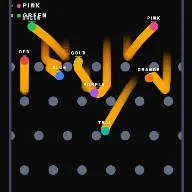
Every track here is a chute swept along a descending centreline, and all of them share one collision model. What differs is the path: a constant-radius helix, a tightening funnel, a slalom whose axis slides side to side, an oval speedway with two hairpins, an hourglass pinched at the waist.

Those differences decide the character of the race far more than any physics setting. A funnel accelerates the pack and squeezes it together, which produces close finishes. A wide helix lets a fast marble get clear early. A slalom keeps forcing the field across each other, which produces constant position changes and few clean leads.

One constraint runs through all of them: the centreline never goes momentarily vertical, because the chute’s lateral axis is derived from the horizontal perpendicular of the tangent, and a vertical tangent has no defined lateral axis. Every shape is built from a circulation term with a positive lower bound on its radius, which guarantees the chute never twists through itself.
Why the leader rule matters more in 3D

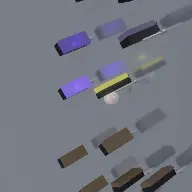
In a flat race, the pack is always visible and the leaderboard is a convenience. In a 3D track, marbles pass behind geometry, drop out of frame on the far side of a bend, and reappear somewhere else. The visual is more dramatic and considerably harder to read.

The leader-sings rule is the compensation. Whatever the camera can see, the melody is coming from first place, so the audio is a continuous readout of who is winning even when the picture is ambiguous.

That is also why the pack click has to be genuinely quiet. It exists to make the field feel populated, and the moment it competes with the leader’s melody the readout stops working and the mode loses the thing that separates it from every other marble race.

Marble Race 3D questions

Open Marble Race 3D

Every control on this page is already in the studio. Load the mode and start from a working run.