BallEngine

Domino 3D:
One grain of rice, one enormous slab

A cascade sweeping along a spiral, a heart or a branching tree, with every piece slightly larger than the last.
Play the preview

In development0 creators want this next

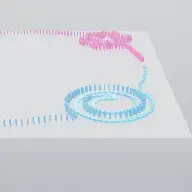
A frame from Domino 3D
Open the studio to run this mode live.

Domino 3D is being built right now

The engine, the physics and the look are done enough to watch. What is not finished is everything around them: the settings, the presets and the export path. So we shipped it as a preview instead of sitting on it.

The order is decided by these votes rather than by us, and the most-voted modes go first. If this is the one you want, say so.

What you can do now
Open it in the studio and watch a full run, with sound, exactly as it stands today.
What is held back
Settings, randomize and export. The preview runs on our defaults so every viewer judges the same version.
When it ships
The most-voted unfinished mode is the one we take next.

What Domino 3D does

A chain reaction sweeping along a spiral, a heart, a star or a branching tree, ending with a domino the size of a grain of rice toppling a slab taller than the camera.

Domino 3D is three beats: anticipation, cascade, payoff. A run is laid out along a shape, the first piece goes, and the topple sweeps along the line. Because the layout can be a spiral, a heart, a five-pointed star or a tree that forks into eight strands at once, the cascade draws the shape as it travels.

The growth layouts are where it earns its ending. Each domino in the run is slightly larger than the one before, so a piece barely bigger than a grain of rice starts a sequence that finishes with a slab taller than the camera. The physical principle is real and the escalation is visible the whole way along.

The branching layouts are the odd ones out. A trunk that forks, or a hub that fires spokes, means several strands are falling at the same instant, so the run stops being a line and becomes a spreading front.

How a run plays out

The exact sequence the engine runs in this mode, from the first frame to the moment the run resolves.
  1. 1.

    The run is laid out along a shape

    Every layout is walked with the same spacing rule, so the contact angle and therefore the feel of the cascade is identical across shapes. Only the path differs.

  2. 2.

    A trigger starts the chain

    A beat of anticipation, then the first piece goes. The trigger timing is what lets the cascade start on the music rather than at an arbitrary moment.

  3. 3.

    The cascade sweeps the path

    Each piece topples the next along the layout, so the shape reveals itself as a moving front rather than being visible from the start.

  4. 4.

    Growth layouts escalate to the payoff

    In the growth layouts every piece is larger than its predecessor, so the run ends with a slab far taller than anything it started with.

Every control in Domino 3D

These are the settings this mode adds on top of the shared physics, visual, audio, and export controls. Names match the studio sidebar exactly.

The run

  • The Run
  • Layout
  • Set The Run Length

Layout is the whole visual identity: a spiral, a heart, a star and a branching tree are four completely different videos from one mechanic.

Camera and timing

  • Camera
  • Timing
  • Trigger

The camera has to keep the front in frame while showing enough of the path ahead for the shape to be readable.

Look

  • Look
  • Color Mode
  • End Color

A colour ramp along the run makes progress readable and gives the growth layouts a visible destination.

Sound

  • Sound
  • Own Sounds
  • Topple Sound
  • Finale Sound

A distinct finale sound is essential in the growth layouts, because the last piece is physically different from everything before it.

Why Domino 3D videos hold attention

What keeps people watching this mechanic.

A chain reaction cannot be paused mentally

Once it is running, the outcome is inevitable but not yet arrived. That is one of the strongest hold mechanics there is.

The shape reveals itself

A viewer works out what is being drawn partway through, which is a small solved puzzle in the middle of the run.

Growth promises a finish

Pieces getting visibly bigger tells the viewer the run is heading toward something large, well before it arrives.

Branching multiplies the action

Several strands falling at once fills the frame and removes any quiet stretch in the middle of a long run.

Videos you can make in this mode

Each of these is a different configuration of the same mode, so one setup session produces a batch of related uploads.

Growth run

A growth layout ending in a slab far taller than the camera. The most complete version of the format.

Shape reveal

A heart or a star, framed so the shape becomes clear about halfway through the cascade.

Spiral sweep

A long spiral for a run with continuous motion and no branching.

Branching tree

A layout that forks into many strands, so the frame is full of parallel cascades.

Hub spokes

A central hub firing lines outward, which produces a burst rather than a sweep.

Ramped colour

A colour ramp along the run so the front is always visible and the ending is signposted.

Make your first Domino 3D video

The order that works. Following it out of sequence usually means retuning settings you already set.
  1. 1.

    Choose the layout

    Shape first. It decides what the video is of, more than any other setting.

  2. 2.

    Set the run length

    Longer runs take longer to sweep. Match the length to the runtime you want rather than adding pieces for their own sake.

  3. 3.

    Frame the camera

    Keep the toppling front in shot while showing enough of the path ahead for the shape to become guessable.

  4. 4.

    Time the trigger

    Start the cascade on a musical beat so the anticipation resolves with the track.

  5. 5.

    Set the finale sound

    Give the last piece its own sound, especially in a growth layout where it is physically enormous.

Settings that make the difference

  1. Growth layouts have the best endings. A run that finishes on a slab taller than the camera has a real payoff.
  2. Frame ahead of the front. A camera locked to the falling piece hides the shape being drawn.
  3. Branching layouts fill a long run. If the middle of your video sags, that is the fix.
  4. A colour ramp along the path makes the progress of the front readable at a glance.
  5. The simulation is deterministic rather than solver-based, so an offline render reproduces the cascade exactly.

What breaks a run

  1. A camera so tight the layout is never visible, which throws away the shape entirely.
  2. A run so long the cascade outlasts the viewer’s interest with no branching to keep it busy.
  3. The same sound on the finale as on every other topple, which flattens the payoff.
  4. A flat colour along the whole run, so there is no visible sense of progress toward the end.

Why there is no rigid-body solver here

A physics engine is the obvious way to build a domino run and the wrong one. A general solver steps on wall-clock time and its contact resolution is sensitive to iteration order, which means the live preview and the offline render will diverge.

For most modes a small divergence is invisible. For a chain reaction it is fatal, because the whole video is a single causal sequence: if one contact resolves differently, everything after it is different, and the export is not the video that was previewed.

So the cascade is computed deterministically rather than solved. The trajectory of each topple follows from the layout and the spacing rule, which is why the run can be trusted to reproduce exactly and why the trigger can be placed on a beat with confidence.


Growth layouts and the payoff problem

A uniform domino run has a pacing problem: the last piece is exactly like the first, so the ending is simply where the line stops. The cascade is satisfying throughout and then it just finishes.

The growth layouts solve that by scaling each piece slightly relative to its predecessor. The effect compounds, so a run that starts with something the size of a grain of rice ends with a slab taller than the camera, and every metre of the run visibly promises a bigger one at the end.

It also gives the camera something to do. A uniform run can be shot from one position; a growth run has to pull back as the pieces get larger, and that retreat is itself a signal to the viewer that something is coming.

Domino 3D questions

Open Domino 3D

Every control on this page is already in the studio. Load the mode and start from a working run.