BallEngine

Pendulum Basin 3D:
Guess the magnet, then zoom in

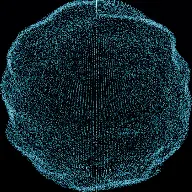
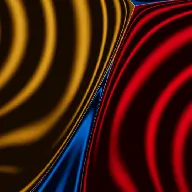
A chaotic magnetic pendulum settling on one of three magnets, and the fractal map of every starting point that would have done the same.
Play the preview

In development0 creators want this next

A frame from Pendulum Basin 3D
Open the studio to run this mode live.

Pendulum Basin 3D is being built right now

The engine, the physics and the look are done enough to watch. What is not finished is everything around them: the settings, the presets and the export path. So we shipped it as a preview instead of sitting on it.

The order is decided by these votes rather than by us, and the most-voted modes go first. If this is the one you want, say so.

What you can do now
Open it in the studio and watch a full run, with sound, exactly as it stands today.
What is held back
Settings, randomize and export. The preview runs on our defaults so every viewer judges the same version.
When it ships
The most-voted unfinished mode is the one we take next.

What Pendulum Basin 3D does

A magnetic pendulum swings over three magnets and settles on one of them. Guess which. Then the camera zooms into the fractal that answers it.

Hang a magnetic bob over a plane with a few magnets on it. A spring pulls it toward the centre, friction slows it, and each magnet attracts it. Eventually it settles on one. Which one is famously, violently sensitive to where it started: two nearly identical releases can end on different magnets.

The set of starting points that end on the same magnet is that magnet’s basin of attraction, and the boundary between basins is a fractal. It never resolves into smooth regions no matter how far you zoom, because arbitrarily close to any point of one basin there are points belonging to the others.

The mode is built in three acts. First one pendulum swings and settles, and the viewer is invited to guess. Then the basin map is revealed, colouring every starting point by where it would end up. Then the camera zooms into the boundary and keeps finding structure.

How a run plays out

The exact sequence the engine runs in this mode, from the first frame to the moment the run resolves.
  1. 1.

    The bob swings

    A spring pulls the bob toward the centre, friction removes energy, and every magnet attracts it. The bob’s height above the plane is what keeps the attraction finite directly over a magnet.

  2. 2.

    It settles on one magnet

    Energy loss means the bob eventually commits. Which magnet it commits to depends on its starting point in a way no amount of eyeballing can predict.

  3. 3.

    The basin map is drawn

    Every starting point is coloured by which magnet it ends on. The result is three interleaved regions whose boundary is fractal.

  4. 4.

    The zoom finds more structure

    Magnifying the boundary reveals the same kind of interleaving at every scale, because the basins are genuinely intertwined rather than merely intricate.

Every control in Pendulum Basin 3D

These are the settings this mode adds on top of the shared physics, visual, audio, and export controls. Names match the studio sidebar exactly.

The three acts

  • The Three Acts
  • Show The First Pendulum

The acts are the structure of the video: guess, reveal, zoom. Skipping the first one removes the question the reveal is answering.

Magnets and detail

  • Magnets
  • Basin Detail
  • Magnet 1
  • Magnet 2
  • Magnet 3

Basin detail is the resolution of the map. Higher detail resolves finer filaments of the boundary at the cost of computation.

Pendulum and plane

  • Pendulum
  • Plane
  • Look

The bob’s height above the plane is the most consequential physical parameter, because it decides how intricate the boundary is.

Text and audio

  • Beat Response
  • Own Sounds
  • Capture Sound
  • Re-Release Sound
  • On-Screen Text
  • Show The Caption
  • Text Color

The caption is what poses the question. Without it the first act is a pendulum swinging for no stated reason.

Why Pendulum Basin 3D videos hold attention

What keeps people watching this mechanic.

It asks a direct question

Which magnet will it land on is answerable in one word, and a viewer who has committed to an answer will stay to hear it.

The reveal is a real answer

The basin map does not just say which magnet won, it shows why the question was unanswerable, which is more satisfying than the answer alone.

The zoom never bottoms out

Magnification keeps producing new structure, so the third act can run as long as you want without repeating.

Three colours read instantly

Three magnets means three colours, and the interleaving is legible at a glance even on a small screen.

Videos you can make in this mode

Each of these is a different configuration of the same mode, so one setup session produces a batch of related uploads.

Guess and reveal

All three acts with the caption on. The complete format and the one to shoot first.

Deep zoom

A short first act and a long zoom into the boundary. Best for a longer, more hypnotic video.

Map only

Straight to the basin map as a static reveal, for a short clip built on one image.

Height study

The same three magnets at different bob heights, showing how the boundary goes from simple to almost entirely fractal.

Colour-coded magnets

Strong distinct magnet colours so the interleaving of the basins is unmistakable.

High detail render

Maximum basin detail for a map whose finest filaments are fully resolved.

Make your first Pendulum Basin 3D video

The order that works. Following it out of sequence usually means retuning settings you already set.
  1. 1.

    Set the magnets

    Three, colour-coded distinctly. The colours are what carry the reveal.

  2. 2.

    Set the bob height

    This is the main control over how intricate the boundary is. Lower gives a wilder map.

  3. 3.

    Turn the caption on

    The question needs to be stated during the first act or the reveal has nothing to answer.

  4. 4.

    Choose the detail level

    Higher detail resolves finer filaments. Match it to how far you plan to zoom.

  5. 5.

    Time the zoom

    Let the map hold long enough to be understood before the camera starts moving into it.

Settings that make the difference

  1. The bob height is the single most important physical setting, because it decides how far the fractal structure goes.
  2. Three magnets is right. Two gives a boundary that is interesting but simple; more than three muddies the colours.
  3. Hold the basin map before zooming. Viewers need a moment to understand what they are looking at.
  4. Distinct magnet colours are essential, because the entire reveal is about which colour is where.
  5. The zoom can run indefinitely, which makes this a good mode for a longer export.

What breaks a run

  1. Skipping the first act, which removes the question and turns the reveal into an abstract image.
  2. Zooming immediately, before the viewer has understood the map they are being taken into.
  3. Similar magnet colours, which makes the interleaving illegible.
  4. A bob height so large the boundary is nearly smooth, which loses the fractal entirely.

Why the boundary is fractal

The pendulum’s equation of motion combines a restoring spring, friction, and an attraction toward each magnet that grows sharply as the bob approaches. Small differences in the initial position are amplified by the passes near each magnet, which is the defining property of a chaotic system.

Amplification means that arbitrarily close to a starting point that ends on the red magnet there are starting points that end on the blue one. Colouring by outcome therefore cannot produce clean regions with smooth borders; it produces regions whose boundary has structure at every scale.

That is why the zoom is a genuine third act rather than a flourish. Magnifying the boundary is not showing a more detailed picture of the same thing; it is showing new interleaving that was not visible before and that continues as far as the computation is willing to go.
The bob height is the interesting knob

The attraction term includes the bob’s height above the plane, and it is there for a practical reason: without it, the inverse-square attraction blows up directly over a magnet and the simulation breaks.

It also turns out to be the most expressive parameter in the mode. A high bob feels a soft, broad pull from each magnet, so trajectories are gentle and outcomes are fairly predictable, which produces a map with large simple regions.

A low bob feels sharp, localised pulls, so trajectories whip between magnets and tiny differences compound quickly. The map becomes almost entirely boundary. That is the setting worth exploring, because it is where the mode’s two payoffs, the unpredictable guess and the endless zoom, are both at their strongest.

Pendulum Basin 3D questions

Open Pendulum Basin 3D

Every control on this page is already in the studio. Load the mode and start from a working run.